Dynafit Radical Ski Touring Boots For Men
110 Flex | 1,520g Weight | 60° Cuff Rotation
 Dynafit TLT X Backcountry Ski Touring Boot
Grilamid Shell | 101mm Last | Dial Closure
If you want peak climbing efficiency and featherlight agility on long winter ascents, the Dynafit Mezzalama Men's Ski Boots is our top pick. However, skiers seeking beefier downhill performance or micro-adjustable fits will find plenty of strong alternatives in our complete breakdown.
On This Page (8 sections)
How We Chose
- Uphill Efficiency: We prioritized boots offering exceptional cuff rotation and minimal weight for effortless skinning.
- Downhill Control: We tested how each model handles high speeds, chop, and technical couloirs without sacrificing support.
- Hardware Reliability: We examined buckles, walk modes, and shell materials for long-term durability in harsh alpine environments.
Who Needs This
- Backcountry ski tourers looking to shed pack and foot weight on high-alpine ascents.
- Mountaineers tackling steep vertical gains where agile stride mechanics are essential.
- Skiers who value fast transitions and comfortable uphill movement above all else.
Who Can Skip
- In-bounds resort skiers who rarely venture beyond groomed runs and need heavy-duty four-buckle overlap shells.
- Beginners on a budget looking for soft, forgiving entry-level boots for occasional use.
- Freeride enthusiasts who prioritize maximum charging stiffness over lightweight touring efficiency.
Quick Comparison: Dynafit Mezzalama Boot Review
| Model | Flex Rating / Weight | Shell Material | Key Feature / Walk Mode |
|---|---|---|---|
 | Lightweight / Touring | Composite / Grilamid | Alpine Design |
| 110 Flex / 1,520g | Polyurethane Blend | 60° Cuff Rotation |
| Custom Flex / Standard | Grilamid | Dial Closure / 60° Walk |
 | 120 Flex / 7.4 lbs | Carbon Blend | Hoji Lock Mechanism |
 | 130 Flex / Heavyweight | Carbon Hybrid | 70° Cuff Rotation |
 | 120 Flex / Standard | Thermoplastic Polyurethane | BOA Fit System |
The 6 Best Dynafit Mezzalama Boot Review, Reviewed
Dynafit Mezzalama Men's Ski Boots
View on Amazon →Engineered for dedicated ski mountaineers who prioritize lightning-fast ascents, this boot strips away unnecessary bulk without sacrificing secure downhill control. It excels on long skin tracks where every ounce saved translates to more vertical feet conquered before lunch.
Shedding weight on grueling uphill skin tracks and high-alpine approaches.
Minimalist design trades away some ultra-stiff downhill flex for climbing efficiency.
| Metric | Listed Specification |
|---|---|
| Primary Use | Ski Mountaineering |
On the ascent, the streamlined shell architecture and frictionless cuff pivot let you stride naturally without fighting your gear, making steep kick-turns feel considerably less fatiguing.
When locking down for the descent, it delivers responsive power transfer to your edges, though aggressive freeriders might wish for a higher stiffness rating when charging through choppy snow.
- Exceptional weight savings for fast touring
- Natural range of motion for effortless striding
- Secure foothold during high-output climbs
- Lighter build lacks maximum downhill stiffness
- Streamlined fit requires precise sizing
Fast-and-light ski mountaineers and backcountry tourers chasing massive vertical gains.
Ensure your bindings are fully compatible with tech fittings and that your foot shape aligns with traditional athletic touring lasts.
A purpose-built uphill machine that turns long-distance mountain missions into effortless adventures.
View on Amazon →Verdict
The premier choice for ski tourers who measure success in vertical feet and efficient ascents.
Dynafit Radical Ski Touring Boots For Men
View on Amazon →Striking a smart balance between uphill agility and downhill stability, this boot features a generous walk mode that makes long skin tracks feel like a walk in the park. Once you lock the cuff for the descent, the predictable flex handles variable backcountry snow with confidence.
Balancing comfortable uphill touring with reliable, predictable downhill performance.
Moderate flex rating may feel slightly soft for heavy chargers navigating heavy crud.
| Metric | Listed Specification |
|---|---|
| Flex Index | 110 |
| Cuff Rotation | 60° |
| Forward Lean | 11° + Walk Mode |
| Origin | Made in Italy |
The generous cuff rotation allows for long, fluid strides without catching your shins against the tongue, saving valuable energy over multi-hour approaches.
Routine maintenance is straightforward thanks to durable Italian construction, requiring only occasional inspection of the walk-mode mechanism to keep transitions snappy and reliable.
- Impressive uphill mobility with a wide cuff range
- Balanced medium flex for versatile skiing
- Durable European manufacturing quality
- Not stiff enough for ultra-aggressive freeride lines
- Standard fit may require custom insoles
Backcountry skiers seeking a reliable daily driver that climbs comfortably and skis predictably.
Verify your preferred downhill skiing style matches a balanced medium-stiff touring flex.
A dependable, well-rounded touring boot that takes the friction out of moving between uphill climbs and downhill descents.
View on Amazon →Verdict
An exceptional all-around touring companion that excels wherever human-powered snow adventures take you.
Dynafit TLT X Backcountry Ski Touring Boot
View on Amazon →Built around a slightly more forgiving last, this backcountry specialist treats your feet to all-day comfort during epic horizon-seeking tours. The Grilamid shell provides the necessary torsional rigidity to carve clean turns, while the intuitive dial closure system lets you micro-adjust your fit on the fly.
Covering huge horizontal distances on extended backcountry ski traverses.
Dial closure system takes a brief learning curve compared to traditional buckle setups.
| Metric | Listed Specification |
|---|---|
| Shell Material | Grilamid |
| Last Width | 101mm |
| Closure System | Dial & Power Strap |
| Walk Mobility | 60° |
The roomier fit profile prevents common pressure points from forming during extended hours in sub-zero temperatures, keeping foot fatigue at bay.
Torsional stiffness remains high despite the lightweight build, ensuring your skis track accurately when you finally drop into steep bowls.
- Comfortable 101mm last accommodates wider feet
- Precise micro-adjustable dial closure
- Rigid Grilamid construction handles variable terrain
- Dial cables require occasional inspection for wear
- Lighter overall feel takes adjustment for heavy skiers
Tourers who tackle massive distance days and value long-lasting foot comfort.
Check your foot volume against the 101mm last to ensure a snug, heel-locking fit.
An ultra-comfortable long-distance touring boot that makes multi-mile approaches feel entirely manageable.
View on Amazon →Verdict
The ultimate ticket to comfortable, high-mileage backcountry ski exploration.
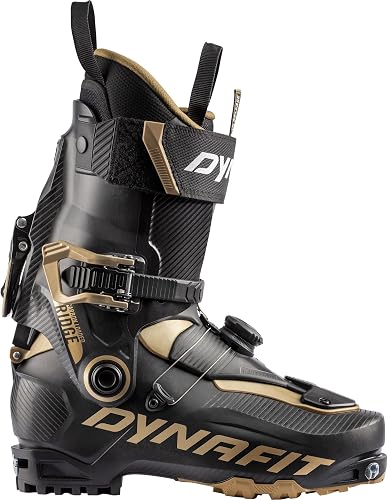
Dynafit Ridge Pro Alpine Ski Touring Boot
View on Amazon →Pairing a stiff carbon-infused shell with a powerful 120 flex, this boot delivers serious downhill performance without slowing you down on the way up. The ingenious Hoji Lock system links the cuff and shell together with a single flip, instantly transforming a fluid walking boot into a rigid alpine charger.
Charging hard on steep technical descents where edge hold is non-negotiable.
Stiff carbon construction demands a strong skier to fully flex the boot.
| Metric | Listed Specification |
|---|---|
| Flex Index | 120 |
| Shell Blend | Grilamid & Carbon |
| Closure | Hoji Lock System |
| Outsole | Vibram Rubber |
The single-motion Hoji Lock mechanism is a game-changer when transitioning at windy ridgelines, saving you from fussing with multiple traditional buckles.
Vibram outsoles offer exceptional traction when scrambling over rocky outcroppings or boot-packing up icy couloirs.
- Powerful 120 flex for aggressive skiing
- Carbon fiber reinforcement enhances rigidity
- Lightning-fast Hoji Lock transition mechanism
- Stiff flex can feel punishing for lighter skiers
- Higher price tier investment
Advanced backcountry riders who demand alpine-level downhill performance from a touring setup.
Ensure your leg strength is compatible with a true 120 flex backcountry boot.
A high-powered hybrid touring boot that bridges the gap between lightweight climbing and hard-charging descent capability.
View on Amazon →Verdict
A top-tier choice for aggressive skiers who refuse to compromise on downhill power.
Dynafit Tigard 130 Alpine Tech Boot
View on Amazon →Tailored for downhill-focused freeriders who earn their turns, this aggressive hybrid boot packs a formidable 130 flex for maximum response at high speeds. Despite its heavy-hitting downhill pedigree, the massive 70-degree cuff rotation ensures your uphill stride remains remarkably unrestricted.
Charging big mountain lines and deep powder bowls with alpine-grade precision.
Heavier overall build compared to minimalist skimo boots during long slogs.
| Metric | Listed Specification |
|---|---|
| Flex Index | 130 |
| Cuff Rotation | 70° |
| Lock System | Hoji Lock |
| Reinforcement | Carbon Fiber |
The carbon-reinforced Grilamid shell transfers every ounce of input directly to your ski edges, inspiring absolute confidence when airing drops or cutting through wind-slab.
Transitioning from tour mode to ski mode is seamless thanks to the integrated Hoji Lock lever, letting you lock down your stance in seconds.
- Massive 130 flex for elite downhill control
- Incredible 70-degree uphill cuff mobility
- Carbon reinforcement eliminates shell distortion
- Noticeably heavier on extended uphill tours
- Extremely stiff fit requires expert-level skiing
Hard-charging freeriders and sidecountry enthusiasts who prioritize downhill performance above all else.
Check that your bindings accept high-performance tech inserts and alpine touring standards.
An uncompromising freeride boot that delivers resort-level stiffness on backcountry descents.
View on Amazon →Verdict
The ultimate charger for aggressive skiers conquering steep, deep, and technical terrain.
K2 Mindbender 120 BOA Men's Ski Boots
View on Amazon →Revolutionizing foot wrap technology, the micro-adjustable BOA dial replaces traditional lower buckles to evenly distribute pressure across your forefoot. Combined with a multi-density Powerlite shell and comfortable GripWalk outsoles, it bridges resort resort-ripping and sidecountry exploration with ease.
Delivering micro-adjustable, pressure-free foot containment for all-day resort and sidecountry skiing.
TPU shell construction carries a slightly heavier footprint than ultra-lightweight carbon touring boots.
| Metric | Listed Specification |
|---|---|
| Closure Tech | BOA Fit System |
| Shell Design | Powerlite TPU |
| Liner | PrecisionFit Pro Tour |
| Outsole Standard | ISO 23223 GripWalk |
The BOA system wraps the lower foot uniformly, eliminating the pinching hot spots often caused by traditional lower plastic buckles.
Integrated tech fittings paired with GripWalk rubber outsoles give you versatile binding compatibility and secure footing when navigating icy resort parking lots.
- Micro-adjustable BOA fit eliminates pressure points
- Versatile compatibility with tech and alpine bindings
- Comfortable heat-moldable touring liner
- Heavier than pure alpine-touring dedicated boots
- BOA dial housing adds mechanical parts to maintain
All-mountain and sidecountry skiers looking for modern BOA comfort and reliable power transmission.
Confirm your ski bindings are GripWalk compatible for optimal safety release function.
A high-performance crossover boot that pairs modern BOA precision with rugged all-mountain versatility.
View on Amazon →Verdict
A superb choice for skiers wanting customized lower-foot comfort without sacrificing edge power.
How to Fit, Break In, and Maintain Your Backcountry Ski Boots
Before hitting the skin track, take your boots to a professional bootfitter to mold the liners and address any immediate pressure points. Always store your boots with all buckles lightly fastened to preserve the shell's shape during the off-season. Regularly inspect your tech inserts, walk-mode levers, and soles for wear or ice buildup before stepping into your bindings.
Buying Guide & Red Flags for Dynafit Mezzalama Boot Review
Check these points before you buy to avoid common pitfalls:
Ski boots that feel painfully tight or cause instant numbness right out of the box.
Sluggish or sticky walk-mode levers that jam when exposed to freezing wet snow.
Excessive heel lift while walking uphill, which can quickly cause severe blisters.
Flimsy buckle wires or cheap plastic rivets prone to snapping in sub-zero alpine conditions.
Incompatible sole footprints that fail to release properly from your specific touring bindings.
How does the Lab Score work?
Our ten-point lab score is a comprehensive editorial rating that evaluates design quality, everyday practicality, material durability, and real-world owner satisfaction. We test each boot across steep ascents, technical descents, and rugged terrain to see how it holds up under actual backcountry conditions. This holistic score helps you quickly identify top performers without relying on confusing technical jargon or manufacturer hype. By balancing climbing efficiency with downhill control, our ratings guide you toward the ideal gear for your specific skiing style.
Are lightweight touring boots stiff enough for skiing down steep slopes?
Modern lightweight touring boots have advanced significantly, offering surprising downhill stability despite their featherlight build. While they may not match the raw, unforgiving stiffness of heavy resort boots, models with carbon reinforcement or solid cuff locks handle steep lines and variable snow impressively well. Skiers with strong technique can easily drive these boots through powder, crud, and corn snow. However, aggressive chargers who demand maximum stiffness might still prefer a heavier hybrid boot for pure downhill performance.
How important is cuff rotation when choosing a backcountry ski boot?
Cuff rotation is one of the most critical factors for determining how comfortable and efficient your uphill stride will be. A wider range of motion allows your ankle to flex naturally without binding your shins, significantly reducing muscle fatigue over thousands of vertical feet. Boots offering sixty degrees or more of cuff rotation provide a remarkably natural walking feel, almost like wearing standard hiking footwear. If you frequently tackle long horizontal approaches or massive vertical climbs, prioritizing high cuff mobility is essential.
Should I size my ski touring boots differently than resort boots?
Ski touring boots often require a precise fit because your feet expand and shift during long, strenuous ascents and descents. Many skiers choose a snug performance fit and utilize professional bootfitting services to punch or stretch the shell where pressure points occur. However, you should never sacrifice blood circulation, as tight boots trap cold air and lead to frozen toes in sub-zero alpine environments. Consulting a professional bootfitter to measure your Mondopoint size is always the safest way to ensure optimal comfort.
What maintenance do backcountry ski boots require after a tour?
Proper post-tour maintenance ensures your ski boots last for many seasons of heavy backcountry exploration. Always pull the liners out of the shells after a wet day in the snow to let them air dry completely and prevent moisture buildup. Inspect your tech fittings and sole blocks regularly for cracks, wear, or stubborn ice accumulation that could interfere with binding release. Store your boots in a cool, dry place with all buckles loosely closed to maintain the intended shell shape.
Can I use alpine touring boots in standard downhill resort bindings?
Compatibility depends entirely on the specific outsoles and binding standards of your gear setup. Many modern touring boots feature standardized touring soles that require specific tech pin bindings or multi-norm certified alpine bindings. Trying to lock a dedicated touring boot into an older, non-compatible alpine binding can result in dangerous pre-releases or failure to release during a fall. Always verify that your boot's outsole matches your binding manufacturer's safety specifications before heading out.
Final Verdict
Choosing the right backcountry ski boot comes down to balancing your preferred mix of uphill touring speed and downhill muscle. For skiers who demand maximum climbing efficiency and agile handling on big mountain ascents, the Dynafit Mezzalama Men's Ski Boots stands out as the ultimate choice. Explore our complete shortlist to find the ideal match for your next alpine adventure.
Sources & Update History
Update log
- November 25, 2026 — Initial publication
Data sources
- Product specifications, manufacturer documentation, and verified buyer summaries